Vice-Rector for Development, International Relations, and Outreach
Professor, Department of Philology
Deputy Director, Institute for Research in Education and Digital Humanities and Social Sciences (PAKEK-PK)
University of Crete
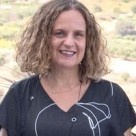
Helen-Melina Tamiolaki
- 1 Με τι ασχολείται η έρευνά σας;
-
My research focuses on the texts of ancient Greek literature, particularly the ancient historians and philosophers of the Classical period (the fifth and fourth centuries BCE). I am especially interested in theories of historiographical writing, including historical methods, narrative techniques, and recurring literary motifs. I also study political thought in ancient Greece, exploring questions related to leadership, political systems, war, and peace. In recent years, I have become increasingly interested in the digital representation of ancient concepts, a field that is currently developing at a remarkable pace.
- 2 Γιατί είναι σημαντική;
-
The study of ancient texts is always relevant. It helps us understand ourselves, the world, and society. For example, Thucydides’ analyses of the psychology of war remain strikingly relevant today. One only needs to recall the recent reference by the President of China to the so-called “Thucydides Trap” to see how ancient ideas continue to shape contemporary political discourse.
Equally important are the skills acquired through the study of ancient literature. Critical thinking, attention to detail, close reading, and analytical reasoning are transferable abilities that can be applied across a wide range of fields, including education, research, culture, and business. For this reason, I often compare Classical Studies, and the humanities more broadly, to the trunk of a tree from which many different branches grow. - 3 Tι σας ενέπνευσε να ακολουθήσετε αυτό το δρόμο;
-
My father was a philologist and my mother is a physicist. Yet it seems that my father’s influence proved more decisive. When I was three years old, he had already taught me the names of animals in both Modern and Ancient Greek. Later, I became fascinated by modern Greek literature, both poetry and prose: I was reading authors such as Nikos Kazantzakis, Alexandros Papadiamantis, C. P. Cavafy, Odysseas Elytis, and George Seferis.
When I reached high school and had to decide what to study, I initially hesitated between several options that might have seemed more practical in terms of career prospects, such as Law or Medicine. Eventually, however, I realized that what I truly wanted was to continue working with texts. I wanted to turn my passion into my profession. I therefore chose to study Philology at the National and Kapodistrian University of Athens, specializing in Classical Studies. I subsequently completed both my Master’s degree and PhD at Sorbonne University, focusing once again on Ancient Greek studies.
Research, however, is very different from what one might simply call “reading.” Not everyone who enjoys books or literature will necessarily become a good researcher. The decisive factor in my own journey was the education and mentorship I received from inspiring teachers and scholars. Ioannis-Theophanes Papadimitriou (1932–2021) was the first professor to assign me a research project when I was an undergraduate student in Athens. I would say that he initiated me into the world of research, with all its challenges and rewards. Paul Demont, who supervised both my Master’s and doctoral work, taught me the importance of clarity and synthesis. Kurt Raaflaub (1941–2023), a Professor of Classics and Ancient History at Brown University (USA), where I conducted research as a doctoral student, taught me how to ask complex questions, think outside the box, challenge established views when supported by evidence, and present my findings in a persuasive and coherent manner. I consider myself extremely fortunate to have had such mentors.
- 4 Τι σας αρέσει περισσότερο στην έρευνα;
-
Research is both a demanding and a fascinating process. I enjoy formulating research questions, gathering evidence, studying scholarly debates in depth, and participating actively in academic discussions. I particularly enjoy identifying assumptions, biases, or established lines of interpretation that deserve to be questioned or reassessed.
Researchers are constantly evaluated, whether when submitting an article to a leading journal or applying for a research grant. There are certainly disappointments along the way, but there are also great rewards. For me, the greatest satisfactions are seeing my work make an impact and gaining recognition for it, as well as having the opportunity to mentor and support the next generation of scholars, through supervision or through evaluation (of articles, research proposals etc).
- 5 Τι συμβουλή θα δίνατε σε ένα παιδί που αγαπά την επιστήμη;
-
I would say that a love of science is not enough on its own. To move forward, one needs more than enthusiasm. Patience, perseverance, and humility are equally important. By humility, I mean moderation and a willingness to recognize one’s limitations and continue learning. Young people must learn to accept criticism and cope with failure. They should strive to improve continuously, develop their skills, and never become complacent. The path of science and research is not a straight line. It is full of challenges, setbacks, and unexpected turns, but it is precisely this journey that makes it so rewarding.
- 6 Fun fact: Πείτε μας κάτι που δεν γνωρίζουν πολλοί για εσάς
-
The handwritten corrections I make to my own work, from the earliest drafts to the final version, are so numerous that my notes sometimes look like the diary of a madman.